Showing posts with label Chandamama. Show all posts

Mar 18, 2013

Naalo uhalaku

నాలో ఊహలకు నాలో ఊసులకు అడుగులు నేర్పావు
నాలో ఆశలకు నాలో కాంతులకు నడకలు నేర్పావు
పరుగులుగా పరుగులుగా అవే ఇలా
ఇవ్వాళ నిన్నే చేరాయి
నాలో ఊహలకు నాలో ఊసులకు అడుగులు నేర్పావు

కళ్ళలో మెరుపులే గుండెలో ఉరుములే
పెదవిలో పిడుగులే నవ్వులో వరదలే
శ్వాసలోన పెనుతుఫానై ప్రళయమౌతోందిలా

నాలో ఊహలకు నాలో ఊసులకు అడుగులు నేర్పావు
నాలో ఆశలకు నాలో కాంతులకు నడకలు నేర్పావు

మౌనమే విరుగుతూ బిడియమే ఒరుగుతూ
మనసిలా మరుగుతూ అవధులే కరుగుతూ
నిన్ను చూస్తూ ఆవిరౌతూ అంతమవ్వాలనీ

నాలో ఊహలకు నాలో ఊసులకు అడుగులు నేర్పావు
నాలో ఆశలకు నాలో కాంతులకు నడకలు నేర్పావు
పరుగులుగా పరుగులుగా అవే ఇలా
ఇవ్వాళ నిన్నే చేరాయి
నాలో ఊహలకు నాలో ఊసులకు అడుగులు నేర్పావు


nAlO Uhalaku nAlO Usulaku aDugulu nErpAvu
nAlO ASalaku nAlO kAntulaku naDakalu nErpAvu
parugulugA parugulugA avE ilA
ivvALa ninnE chErAyi
nAlO Uhalaku nAlO Usulaku aDugulu nErpAvu

kaLLalO merupulE gunDelO urumulE
pedavilO piDugulE navvulO varadalE
SwAsalOna penutuphAnai praLayamautOndilA

nAlO Uhalaku nAlO Usulaku aDugulu nErpAvu
nAlO ASalaku nAlO kAntulaku naDakalu nErpAvu

maunamE virugutU biDiyamE orugutU
manasilA marugutU avadhulE karugutU
ninnu chUstU AvirautU aMtamavvAlanI

nAlO Uhalaku nAlO Usulaku aDugulu nErpAvu
nAlO ASalaku nAlO kAntulaku naDakalu nErpAvu
parugulugA parugulugA avE ilA
ivvALa ninnE chErAyi
nAlO Uhalaku nAlO Usulaku aDugulu nErpAvu


Bugge bangarama

పచ్చి పాల యవ్వనాలా గువ్వలాట
పంచుకుంటే రాతి రంతా జాతరంట

బుగ్గే బంగారమా సిగ్గే సింగారమా అగ్గే రాజేసేలేమ్మా
ఒళ్ళే వయ్యరమా నవ్వే మందారమా నన్నే కాజెసేనమ్మ
పట్టు చీరల్లో చందమామ
ఏడు వన్నెల్లో వెన్నేలమ్మ
కన్నె రూపాల కోనసీమ
కోటి తారల్లో ముద్దు గుమ్మ
బుగ్గే బంగారమా సిగ్గే సింగారమా అగ్గే రాజేసేలేమ్మా
ఒళ్ళే వయ్యరమా నవ్వే మందారమా నన్నే కాజెసేనమ్మ

ఎదురే నిలిచే అధర మధుర దరహాసం
ఎదురై పిలిచే చిలిపి పడుచు మధు మాసం
వెలిగే అందం చెలికే సొంతం వసంతం
వరమై దొరికే అసలు సిసలు అపురూపం
కలిసే వరకు కలలో జరిగే విహారం
పుష్య మాసాన మంచు నీవో
భోగి మంటల్లో వేడి నీవో
పూల గంధాల గాలి నీవో
పాల నురగల్లో తీపి నీవో

బుగ్గే బంగారమా సిగ్గే సింగారమా అగ్గే రాజేసేలేమ్మా

నాగమల్లి పూలతోన నంజుకున్న ముద్దులార
సందె గాలి కొట్టగానే ఆరు బయట ఎన్నెలంతా
సద్దుకున్న కన్నె జంట సద్దులాయెరో..యో
నారు మల్లె తోటకాడ నాయుడోరి ఎంకిపాట
నాగమల్లి పూలతోన నంజుకున్న ముద్దులార
సందె గాలి కొట్టగానే ఆరు బయట ఎన్నెలంతా
సద్దుకున్న కన్నె జంట సద్దులాయెరో..

ఎదలో జరిగే విరహ సెగల వనవాసం
బదులే అడిగే మొదటి వలపు అభిషేకం
వధువై బిడియం ఒదిగే సమయం ఎపుడో
జతగా పిలిచే అగరు పొగల సహవాసం
జడతో జగడం జరిగే సరసం ఎపుడో
అన్ని పువ్వుల్లో ఆమె నవ్వే
అన్ని రంగుల్లో ఆమె రూపే
అన్ని వేళల్లో ఆమె ధ్యాసే
నన్ను మొత్తంగా మాయ చేసె

బుగ్గే బంగారమా సిగ్గే సింగారమా అగ్గే రాజేసేలేమ్మా
ఒళ్ళే వయ్యరమా నవ్వే మందారమా నన్నే కాజెసేనమ్మ
పట్టు చీరల్లో చందమామ
ఏడు వన్నెల్లో వెన్నేలమ్మ
కన్నె రూపాల కోనసీమ
కోటి తారల్లో ముద్దు గుమ్మ


pachchi pAla yavvanAlaa guvvalATa
paMchukuMTE rAti raMtA jAtaraMTa

buggE baMgAramA siggE siMgAramA aggE rAjEsElEmmA
oLLE vayyaramA navvE maMdAramA nannE kAjesEnamma
paTTu chIrallO chaMdamAma
EDu vannellO vennElamma
kanne rUpAla kOnasIma
kOTi tArallO muddu gumma
buggE baMgAramA siggE siMgAramA aggE rAjEsElEmmA
oLLE vayyaramA navvE maMdAramA nannE kAjesEnamma

edurE nilichE adhara madhura darahAsaM
edurai pilichE chilipi paDuchu madhu mAsaM
veligE aMdaM chelikE soMtaM vasaMtaM
varamai dorikE asalu sisalu apurUpaM
kalisE varaku kalalO jarigE vihAraM
pushya mAsAna maMchu nIvO
bhOgi maMTallO vEDi nIvO
pUla gandhAla gAli nIvO
pAla nuragallO tIpi nIvO

buggE baMgAramA siggE siMgAramA aggE rAjEsElEmmA

nAgamalli pUlatOna nanjukunna muddulAra
sande gAli koTTagAnE Aru bayaTa ennelantA
saddukunna kanne janTa saddulAyerO..yO
nAru malle tOTakADa nAyuDOri enkipATa
nAgamalli pUlatOna nanjukunna muddulAra
sande gAli koTTagAnE Aru bayaTa ennelantA
saddukunna kanne janTa saddulAyerO..

edalO jarigE viraha segala vanavAsaM
badulE aDigE modaTi valapu abhishEkaM
vadhuvai biDiyaM odigE samayam epuDO
jatagA pilichE agaru pogala sahavAsaM
jaDatO jagaDaM jarigE sarasaM epuDO
anni puvvullO Ame navvE
anni rangullO Ame rUpE
anni vELallO Ame dhyAsE
nannu mottangA mAya chEse

buggE baMgAramA siggE siMgAramA aggE rAjEsElEmmA
oLLE vayyaramA navvE maMdAramA nannE kAjesEnamma
paTTu chIrallO chaMdamAma
EDu vannellO vennElamma
kanne rUpAla kOnasIma
kOTi tArallO muddu gumma


Regu mullole

రెగుముళ్ళోలె నాటు సిన్నది బొడ్డు మల్లెలు సూడు అన్నది
మీసాలు గుచ్చకుండా ఒరేయ్ బావో ముద్దాడుతావా అంది
కంది పూవల్లె ముట్టుకుంటాను కందిరీగల్లె కుట్టిపోతాను
కుచిళ్ళు జారకుండా ఒరేయ్ బావో కౌగిళ్ళు ఇవ్వు నువ్వు
నీ నడుముకెంత పొగరబ్బా అది కదులుతుంటే వడదెబ్బ
నువు కెలకమాకు మనసబ్బా ఇక నిదుర రాదు నీయబ్బ
మీసాఉ గుచ్చకుండా...

కోనేటి నీళ్ళల్లో వంగిందిరో
కుండల్లే నా గుండె ముంచిందిరో
తను తడిసిందిరో నను తడిపిందిరో
ఆ పిట్ట గొడెక్కి నుంచుందిరో
కొమ్మొంచి కాయేదో తెంపిందిరో
అది జాంపండులా నను తింటుందిరో
ఎదురే పడితే ఎదలో గుండు సూదల్లె దిగుతావురో
తన కనులు గిలికి సింగారి తన జడను విసిరి వయ్యారి
చిరు నగవు చిలికి ఒకసారి కొస పెదవి కొరికి ప్రతిసారి
యహ మీసాలు గుచ్చకుండా ఒరేయ్ బావో ముద్దడతావా నువ్వు

ఆ జొన్న చేలళ్ళే పక్కందిరో
ఒళ్ళోన చెయ్యేస్తే సిగ్గందిరో
బులుపే తీరక కసి ఊరిందిరో
ఓసారి నాతోనే సై అంటేరో
దాసొహమౌతాను నూరెళ్ళురో
ఇక తన కాళ్ళకే పసుపవుతానురో
ఇదిగో పిల్లడో నువ్వు గుండెల్లో ప్రాణాలు తోడొద్దురో
నీ నడుము పైన ఒక మడతై పై జనమలోన ఇక పుడతా
అని చెలిమి చేరి మొర పెడితే తెగ కులుకులొలికె ఆ సిలక
మీసాలు గుచ్చకుండా ఒసేయ్ భామ ముద్దాడలేనే నేను

కంది పూవల్లె ముట్టుకుంటాను అహ కందిరీగల్లె కుట్టిపోతాను
కుచిళ్ళు జారకుండా ఒరేయ్ బావో కౌగిళ్ళు ఇవ్వు నువ్వు
మీసాలు గుచ్చకుండా ఒరేయ్ బావో ముద్దాడుతావా అంది


regumuLLOle nATu sinnadi boDDu mallelu sUDu annadi
mIsAlu guchchakuMDA orEy bAvO muddADutAvA aMdi
kaMdi pUvalle muTTukuMTAnu kaMdirIgalle kuTTipOtAnu
kuchiLLu jArakuMDA orEy bAvO kaugiLLu ivvu nuvvu
nI naDumukeMta pogarabbA adi kadulutuMTE vaDadebba
nuvu kelakamAku manasabbA ika nidura rAdu nIyabba
mIsAu guchchakuMDA...

kOnETi nILLallO vaMgiMdirO
kuMDallE nA guMDe muMchiMdirO
tanu taDisiMdirO nanu taDipiMdirO
A piTTa goDekki nuMchuMdirO
kommoMchi kAyEdO teMpiMdirO
adi jAMpaMDulA nanu tiMTuMdirO
edurE paDitE edalO guMDu sUdalle digutAvurO
tana kanulu giliki siMgAri tana jaDanu visiri vayyAri
chiru nagavu chiliki okasAri kosa pedavi koriki pratisAri
yaha mIsAlu guchchakuMDA orEy bAvO muddaDatAvA nuvvu

A jonna chElaLLE pakkaMdirO
oLLOna cheyyEstE siggaMdirO
bulupE tIraka kasi UriMdirO
OsAri nAtOnE sai aMTErO
dAsohamautAnu nUreLLurO
ika tana kALLakE pasupavutAnurO
idigO pillaDO nuvvu guMDellO prANAlu tODoddurO
nI naDumu paina oka maDatai pai janamalOna ika puDatA
ani chelimi chEri mora peDitE tega kulukulolike A silaka
mIsAlu guchchakuMDA osEy bhAma muddADalEnE nEnu

kaMdi pUvalle muTTukuMTAnu aha kaMdirIgalle kuTTipOtAnu
kuchiLLu jArakuMDA orEy bAvO kaugiLLu ivvu nuvvu
mIsAlu guchchakuMDA orEy bAvO muddADutAvA aMdi


Mukkupai muddu

ముక్కుపై ముద్దు పెట్టు ముక్కెరై పోయేట్టు
చెంపపై ముద్దు పెట్టు చెక్కరై పోయేట్టు
మీసంపై ముద్దు పెట్టు మీదికే డూకేట్టు
గడ్డంపై ముద్దు పెట్టు గుండెనే తాకేట్టు

మొదట నుదిటి మీద ఒక్క బొట్టు ముద్దు
ఆ పిదప చెవికి చిన్న బుట్ట ముద్దు
మత్తు మెడకు ఒక్క మొక్క జొన్న ముద్దు
గమ్మత్తు గొంతుకొక్క సన్నజాజి ముద్దు
బుగ్గ పండు కోరికేసె రౌడీ ముద్దు
కొంటె ఈడు కాజేసే కేడి ముద్దు
కంత్రి ముద్దు జాగజ్జంత్రి ముద్దు
ముద్దు ముద్దు ముద్దు ముద్దు ముద్దు
ముక్కుపై ముద్దు పెట్టు..

వగల నడుము మడత మీద వడ్దాణం ముద్దు
ఈ నాభి చుట్టూ వేడి సెగల సిగ్గానం ముద్దు
ఓంటి వన్నె చిన్నె విన్నపాల ముద్దు
పువ్వంటి కన్నెకొక్క జున్నుపాల ముద్దు
అల్లరాణి వల్ల కానిగా అల్లరి ముద్దు
అల్లసాని పద్య మంత అల్లిక ముద్దు
ఆవకాయ్ ముద్దు ఆది ఆంధ్ర ముద్దు
ముద్దు ముద్దు ముద్దు ముద్దు ముద్దు

ముక్కుపై ముద్దు పెట్టు మీదికే డూకేట్టు
చెంపపై ముద్దు పెట్టు గుండెనే తాకేట్టు
ముక్కుపై ముద్దు పెట్టు..


mukkupai muddu peTTu mukkerai pOyETTu
chempapai muddu peTTu chekkarai pOyETTu
mIsampai muddu peTTu mIdikE DUkETTu
gaDDampai muddu peTTu guMDenE tAkETTu

modaTa nudiTi mIda okka boTTu muddu
A pidapa cheviki chinna buTTa muddu
mattu meDaku okka mokka jonna muddu
gammattu goMtukokka sannajAji muddu
bugga paMDu kOrikEse rauDI muddu
koMTe IDu kAjEsE kEDi muddu
kaMtri muddu jAgajjaMtri muddu
muddu muddu muddu muddu muddu
mukkupai muddu peTTu..

vagala naDumu maData mIda vaDdANam muddu
I nAbhi chuTTU vEDi segala siggAnaM muddu
OMTi vanne chinne vinnapAla muddu
puvvaMTi kannekokka junnupAla muddu
allarANi valla kAnigA allari muddu
allasAni padya maMta allika muddu
AvakAy muddu Adi AMdhra muddu
muddu muddu muddu muddu muddu

mukkupai muddu peTTu mIdikE DUkETTu
chempapai muddu peTTu guMDenE tAkETTu
mukkupai muddu peTTu..


Chengu chengu

ఛెంగు ఛెంగు ఛెంగుమంటూ తుళ్ళుతున్న తుంగభద్ర
చెంగులాంటి పల్లెటూరు చెన్నకేశవా
ఘల్లు ఘల్లు ఘల్లుమన్న ఎడ్ల బండి జోరు చూసి
ఏరువాక సాగుతుంటే చెంత చేరవా
ఏయ్ ఎర్ర మిరప కన్ను ఆ ఎండ పొద్దుకు
చుర్రు చుర్రంటూ గుచ్చే ఈ పల్లె బుగ్గకు
కోలో కోయిల పాట ఈ కొమ్మ గొంతుకు
ఏలో ఎన్నెల్లో ఊట ఆ కొండ కోనకు
ఏలో ఏలమ్మ ఏలో ఏలో చమ్మ కేళిల ఏలో
ఛెంగు ఛెంగు ఛెంగుమంటూ తుళ్ళుతున్న తుంగభద్ర
చెంగులాంటి పల్లెటూరు చెన్నకేశవా

నూనూగు మీసాల ఊరి పెద్దలం
ఎవడెంతటోడైన మాది పెత్తనం
పక్కవాడు ఏడిస్తే ప్రాణమిస్తాం
బక్కవాడు కనిపిస్తే ఏడిపిస్తాం
ఎన్నుపూస లేనోణ్ణి ఎండగడతాం
ఎన్నపూస మనసుంటే ఎంట పడతాం
కాడి పట్టి దున్నుతున్న బాలచంద్రులం
ఆకలేసి అరిసినోళ్ళకన్నదాతలం
చిట్టిగువ్వ రెక్క రంగు చీర కట్టుకున్నది
ఉట్టిమీది ఎన్న లాగ ఊరిస్తా ఉన్నది
కొబ్బరాకు పచ్చలాంటి కొంగు తిప్పుతున్నది
జబ్బ చూసి నాటి నుంచే బెంగ పెట్టుకున్నది
నా లేత తమల పాకా నా రాజానిమ్మల పండా
నా గున్న మామిడి మొక్కా నాకున్న మాపటి దిక్కా
ఏలో ఏలమ్మ ఏలో ఏలో చమ్మ కేళిల ఏలో

మేలుకోవే ఓ మనసా
మేలుకోవే ఓ మనసా
బొమ్మనే చేశాడు ప్రాణమే పోశాడు
సిరులిచ్చి దీవించి చింతలే తీర్చాడు
ఉన్ననాడే మేలుకొని ఉట్టికెక్కమన్నాడు
ఊపిరాగిపోయిందా మట్టిపాలే వీడు
మేలుకోవే ఓ మనసా
మేలుకోవే ఓ మనసా

ప్రాయమంతా పండగే చేశావు
తల పండినాక తత్వమే చెబుతావు
అనుభవించనివ్వు ఈ వైభోగం
వయసు ఉడిగి పోయాకే వైరాగ్యం
ఏలో ఏలమ్మ ఏలో ఏలో చమ్మ కేళిల ఏలో

ఛెంగు ఛెంగు ఛెంగుమంటూ తుళ్ళుతున్న తుంగభద్ర
చెంగులాంటి పల్లెటూరు చెన్నకేశవా
ఘల్లు ఘల్లు ఘల్లుమన్న ఎడ్ల బండి జోరు చూసి
ఏరువాక సాగుతుంటే చెంత చేరవా


CheMgu CheMgu CheMgumaMTU tuLLutunna tuMgabhadra
cheMgulAMTi palleTUru chennakESavA
ghallu ghallu ghallumanna eDla baMDi jOru chUsi
EruvAka sAgutuMTE cheMta chEravA
Ey erra mirapa kannu A eMDa podduku
churru churraMTU guchchE I palle buggaku
kOlO kOyila pATa I komma goMtuku
ElO ennellO UTa A koMDa kOnaku
ElO Elamma ElO ElO chamma kELila ElO
CheMgu CheMgu CheMgumaMTU tuLLutunna tuMgabhadra
cheMgulAMTi palleTUru chennakESavA

nUnUgu mIsAla Uri peddalaM
evaDeMtaTODaina mAdi pettanaM
pakkavADu EDistE prANamistAM
bakkavADu kanipistE EDipistAM
ennupUsa lEnONNi eMDagaDatAM
ennapUsa manasuMTE eMTa paDatAM
kADi paTTi dunnutunna bAlachaMdrulaM
AkalEsi arisinOLLakannadAtalaM
chiTTiguvva rekka raMgu chIra kaTTukunnadi
uTTimIdi enna lAga UristA unnadi
kobbarAku pachchalAMTi koMgu tipputunnadi
jabba chUsi nATi nuMchE beMga peTTukunnadi
nA lEta tamala pAkA nA rAjAnimmala paMDA
nA gunna mAmiDi mokkA nAkunna mApaTi dikkA
ElO Elamma ElO ElO chamma kELila ElO

mElukOvE O manasA
mElukOvE O manasA
bommanE chESADu prANamE pOSADu
sirulichchi dIviMchi chiMtalE tIrchADu
unnanADE mElukoni uTTikekkamannADu
UpirAgipOyiMdA maTTipAlE vIDu
mElukOvE O manasA
mElukOvE O manasA

prAyamaMtA paMDagE chESAvu
tala paMDinAka tatvamE chebutAvu
anubhaviMchanivvu I vaibhOgaM
vayasu uDigi pOyAkE vairAgyaM
ElO Elamma ElO ElO chamma kELila ElO

CheMgu CheMgu CheMgumaMTU tuLLutunna tuMgabhadra
cheMgulAMTi palleTUru chennakESavA
ghallu ghallu ghallumanna eDla baMDi jOru chUsi
EruvAka sAgutuMTE cheMta chEravA


Dec 25, 2012

Rajeswara Rao- One of The Great Music Directors

 S.Rajeswara Rao -Music Director of South Indian cinema (The King of Swaras)


Saluru Rajeswara Rao  is famous Music composer for South Indian Films.He was born in Sivaramapuram village near Salur in Vizianagaram district (erstwhile Srikakulam district), Andhra Pradesh, India. His father, Sanyasi Raju, was a famous mridangam player for the concerts of Dwaram Venkataswamy Naidu and was also a lyricist.His tryst with cinema came unexpectedly in the form of a talent-scouting Huchins Recording Company to his native place Vizianagaram in 1934.


A child prodigy, he could identify the Carnatic music ragams at the tender age of four and by the time he was seven, he started giving stage performances. Huchins spotted "master" Rajeswara Rao and took him to Bangalore along with his father. They recorded "Bhagawat Gita" in Rajeswara Rao's voice. P.V.Das and Gudavalli Ramabramham, Film Producers, visited Bangalore, and impressed by his singing ability, brought him to Madras. They cast him as Lord Krishna in their "Sri Krishna Leelalu" in 1934. The film was released the next year (1935) and Rajeshwara Rao became a household name all over Andhra Pradesh. Later he played the role of "Abhimanyu" in "Maya Bazar"(1936).He went to Calcutta (now Kolkata) to act in "Keechaka Vadha". He met such stalwarts as Kundan Lal Saigal and Pankaj Mullick. He became a disciple of Saigal and learned Hindustani music for a year. He also learnt to play the sitar and the surbahar. He had already mastered playing the tabla, dholak, and miridangam, later the piano, harmonium, mandolin and the electric guitar too. He learnt orchestration and how to mix the sounds of different instruments.He returned to Madras in 1938 and formed his own music troupe. He worked as assistant to Jayaramayyar for a Tamil film "Vishnuleela" in which he also played the role of 'Balarama' and sang his own songs. He became a full-fledged music director with "Jayaprada". He continued with his acting in "Balanagamma" and "Illalu" in which he acted opposite his famous singing partner, Rao Balasaraswati Devi.When He entered the industry there was no playback system. The Actors used to sing and act at the same time with the orchestra in the background unseen by the camera. While he was doing "Illalu" the playback system had come into vogue.Rajeswara Rao showed thru his private records how light music should be set in Telugu films.


Challa Galilo Yamuna Tati pi syamsundaruni Murali  - Listen to this Great Work


"Thummeda Oka saari", "Kopamela Radha", "Podarintilona", "Rave Rave Koyila", "Challa Gaalilo" "Paata Paduma Krishna" all of which his father has written. Rajeshwara Rao, through these songs, set a new trend in light music in Telugu.Rajeswara Rao's most rewarding assignments came from Gemini, which he joined in 1940 and lasted for a decade. After leaving Gemini, he got an offer to provide music for B.N.Reddy's "Malleeswari" (1950). It was a sensational music hit. Then came "Vipranarayana", "Missamma" and a host of other musical hits, more than a hundred of them in Tamil and Telugu and a few in Kannada. When Vijaya's "Missamma" was made into "Miss Mary" in Hindi, Hemantha Kumar provided the music. He changed all the tunes, but retained one - "Brindavanamum Nandakumaranum" which Hemantha liked so much that he took permission to retain it in the Hindi version - an instance of one master's tribute to another.Among the classical ragas, Rajeswara Rao likes Bhimplas, Sindhu Bairavi, Kafi, Kalyani, Pahad, and Malkauns, which he has used most in his songs.His two assistants for over four decades Rajagopal and Krishnan, both well versed in classical music, have proved an asset to him. Music flows in Rajeswara Rao's family. His elder brother S. Hanumantha Rao was a music director in the Kannada and Telugu. He has five sons and four daughters. His eldest son, Ramalingeswara Rao is a well-- known piano and electric organ player in the South India. His second son, Poornachandra Rao, is a popular guitarist. His third and fourth sons, Vasu Rao and Koteswara Rao are well-known music directors. Koteswara Rao (Koti) has formed a team with Somaraju (son of veteran music director T.V.Raju) as Raj-Koti and the duo is a popular team in Telugu film music for quite some time before they have split up and started composing independently. Today, Koti is a well known music director in Telugu film industry. Rajeswara Rao's fifth son Dhurga Prasad is not associated with the film industry. All his four daughters are well placed: his first daughter Rama Devi (married to A.V.RamaKrishna), second daughter Mangamma (married to T.G.Venkatesh), third daughter Kousalya (married to A.Venu Gopal), and fourth daughter Vijaya Lakshmi (married to Madhan Kumar).


His tryst with cinema came unexpectedly in the form of a talent-scouting Huchins
Recording Company to his native Vizianagaram in 1934. A child prodigy, he could identify the ragas at the tender age of four and by the time he was seven, he started giving stage performances. His father, Sanyasi Raju, was a famous miridangam player for the concerts of Dwaram Venkatasamy Naidu and was also a lyricist. Huchins spotted "master" Rajeshwara Rao and took him to Bangalore along with his father.


"I was 13 then. Since then I have stayed put in the field of film music and records,"
recalls Rajeshwara Rao. Huchins recorded "Bagavat Gita" in Rajeawara Rao's voice. Soon word spread about his melliflous voice and producers P.V.Das and Gudavalli Ramabramham, visted Bangalore, and impressed by his singing ability, brought him to Madras. Finding that young Rajeshwara Rao had stage experience too, they cast him as Lord Krishna in their "Sri Krishna Leelau" in 1934. The film was released the next year and Rajeshwara Rao became a household name all over Andhra. Later for the same team he played the role of "Abhimanyu" in "Maya Bazar"(1936). The next year he went to Calcutta to act in "Keechaka Vadha".

Though he won appreciation as a singer-actor, the urge to prove himself as a musician was stronger in him. In Calcutta he met such stalwarts as Kundan Lal Saigal and Pankaj Mullick, and got exposed to Hindustani music. He became a disciple of Saigal and learned Hindustani music for a year. He also learnt to play the sitar and the surbahar. He had already mastered playing the tabla, dholak, and miridangam without the help of a guru. Later he learnt the piano, harmonium, mandolin and the electric guitar too. By this time he had acquired the knowledge of orchestration, of how to mix the sounds of different instruments.

Rajeshwara Rao returned to Madras in 1938 and formed his own music troupe, became an assistant to Jeyaramayyer for a Tamil film "Vishnuleela" in which he also played the role of Balarama and sang his own songs. The film was directed by Raja Sandow. This was the only film for which Rajeshwara Rao worked as a music assistant. Later he tuned a few songs for a Kanada film, "Vasantha Sena" (1939) for which R.Sudharsanam provided the music. The same year he became a full-fledged music director with "Jeyaprada" (Pururava) which Chitrapu Narashima Rao directed. Alongside, he continued with his acting in "Balanagamma" and "illalu" in which he acted opposite his famous singing partner, Rao Balasarawati Devi. Bala Saraswati incidently had acted in
"Sri Krishna Leelalu" too.

By the time "Illalu" was commissioned Rajeswara Rao was no more interested in acting. His mind was set on film music. Even his father felt his son would shine as a music director. He approached Ramambrahmam. The director was sceptical at first as it was a social film and doubted whether Rajeshwara Rao could do justice to it. Moreover Bhimavarapu Narashima Rao (BNR) was his permanenet music director. After much persuasion and when BNR himself told the director to give the boy a try, Rajeshwara Rao was given a cradle song as an experiment. He composed the music and rendered the song much to the delight of Director as well as the original music director of the film. Rajeshwara Rao got the job he wanted. He also acted in the movie, which was his last
as an actor.

"When I entered the industry there was no playback system. We used to sing and act at the same time with the orchestra in the background unseen by the camera. But by the time I was doing "Illalu" the playback system had come into vogue," recalls the veteran. When the Telugu film song was evolving from stage poetry to modern lyric, Rajeshwara Rao showed thru his private records how light music should be. "Thummeda Oka saari", "Kopamela Radha", "Podarintilona", "Rave Rave Koyila", "Challo Gaalilo" "Paata Paduma Krishna" all of which his father has written.

Rajeshwara Rao, through these songs, set a new trend in light music in Telugu. Rajeshwara Rao's most rewarding assignments came from Gemini, which he joined in 1940. "I joined Jemini on a salary of Rs. 600 as a music director and by the time "Chandraleka" was made, it rose to Rs. 1500. My association with Gemini continued for a decade and "Apoorva Sagotharagal"(1950) was my last film for them." "Jeevan mukthi", "Balanagamma", "Mangamma Sabatham", and "Chandrelekha" were some of the movies for which he created music while in Gemini. In those days when there were hardly any modern technical equipment he created in "Balanagamma" re-recording effects "on par with any Hollywood film". "And in "Chandreleka" simply because I mixed western music to local taste it was appreciated both within the country and abroad. For music there are no barriers. There is nothing wrong in making use of western tunes, moulding them carefully to our taste and to our form. I have done that for some of my songs in later films like "Iddaru Mithurulu" and "Bharya Bharthalu" during the seventies.


Though I have made use of western tunes, no one can say that I have blindly copied them. But today the scene is different. Western tunes are being used as they are in our films. This is very unfortunate" says Rajeshwara Rao.


After leaving Gemini, he got an offer to provide music for B.N.Reddy's "Malleswari"
(1950). It was a sensational music hit. Then came "Vipranarayana", "Missiamma" and a host of other musical hits, more than a hundred of them in Tamil and Telugu and a few in Kannada. Some of the films might have failed in the box office, but his music has never let down cinegoers. When Vijaya's "Missiamma" was made into "Miss Mary" - producers AVM in Hindi, Hemantha Kumar provided the music. He changed all the tunes, but retained one - "Brindavanamum Nandakumaranum" which Hemantha liked so much that he took permission to retain it in the Hindi version - an instance of one master's tribute to another.

Among the classical ragas, Rajeswara Rao likes Bhimplas, Sindhu Bairavi, Kafi, Kalyani, Pahad, and Malkauns, which he has used most in his songs. "Generally songs set in these ragas become popular with the audience" feels Rajeshwara Rao. Some of the memorable films for which he composed music are: "Vikramathithan", "PremapAsam", "Paanai Pidithaval Pagyasali", "Amaradevi", "Iru Sagotharagal", "Aval Yaar" besides "Chadralehka". Tamil-Telugu bilinguals: "Allauddin Adbhutha Deepam", "Mangamma Sabatham", "Apoorva Sagotharaagal", "Missiamma", and "Chakradhari". Telugu: "Chenchu Lakshmi", "Bheesma", "BhaleRamudu", "Iddaru Mithurulu", "Kulagothralu", "Baktha Jeyadeva", "Amarasilpi Jakkannachari", "Baktha Pragalatha", "Rangula Ratnam", "Vipranarayana", "Dr Chakravarthy", and "Chitti Chellue". Hindi: "Chandrelekha" and "Nishan".

Rajeshwara Rao's two assistants for over four decades Rajagopal and Krishnan, both well versed in classical music have proved an asset to him.


Music flows in Rajeshawara Rao's family. His elder brother S. Hanumantha Rao was a music director in his own right in the Kannada & Telugu field. Rajeshwara Rao's eldest son, Ramalingeswara Rao is well known piano and electric organ player in the South. His second son, Poornachandra Rao, is a popular guitarist while his third and fourth sons, Vasu Rao and Koteswara Rao are well-known music directors today. Vasu Rao has preferred to go it alone on the lines of his father's melody, but Koti has formed a team with Somaraju (son of veteran music director T.V.Raju) as Raj-Koti and the duo is the most popular team in Telugu film music today.

On the quality of today's film music, Rajeshwara Rao blames he producers and
directors. "It is not the audience, but the producers and directors, who are to be blamed.
Today film making and music are like fast food," he says. Among the directors he rates Singgetham Srinivasa Rao , who learnt Carnatic vocal under Rajeshwara Rao, as a man with music knowledge.


Rajeshwara Rao was awarded the honorary doctorate "Kalaprapoorna" in 1979 by the Andhra University. He was appointed "Asthana Vidwan" by Tirumala Tirupathi
Devasthanams, during which period he composed music for Annamacharya Keerthanas sung by Ghantasala.

His success formula for film music: "In every film as far as possible there should be a classical song, a folk song, a rock-n-role type of song to appeal to the tastes of different viewers. Variety is important in film music."

Awards

    Rajeswara Rao was awarded the honorary doctorate "Kalaprapoorna" in 1979 by the Andhra University.
    He was appointed "Asthana Vidwan" by Tirumala Tirupati Devasthanams, during which period he composed music for Annamacharya Keerthanas sung by Ghantasala.
    He was "Kalaimaamani" award winner by Tamil Nadu Iyal Isai Nataka Mandram.
    He was awarded the prestigious Raghupathi Venkaiah Award by the Government of Andhra Pradesh for his outstanding contribution to Telugu cinema in 1992..

Gsv Pics |Gsv Vids | Techno zip| Divine Thought | For The Sake of Us | Gsv Films | DMCA POLICY

Mar 28, 2010

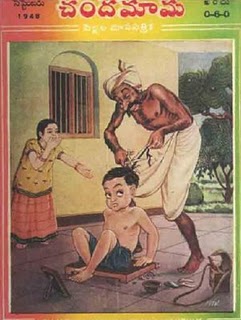
Download RARE Chandamama 1948-Telugu-Magazine

A very rare Children's Magazine is just a click away to download and read interesting stories this summer...

bookmark Gsv Films
for more Old issues are coming up  -Chandamama....TREASURE OF TELUGU
Know about the Great magazine :
Established in 1947, Chandamama is the brain-child of visionaries B.Nagi Reddy belongs to TADIPATRI(ANANTAPUR District of Andhra pradesh in INDIA) and Chakrapani. The magazine was launched with an aim to entertain and educate young minds about the rich traditions of India. Chandamama has been delighting readers since then with engrossing stories, amazing facts, and thought-provoking features. Mention Chandamama, and one will instantly recall popular features such as Vikram/Vetala, stunning artwork, and beautiful renditions of mythological tales.  Known for its vibrant illustrations and accurate depiction of traditional stories, the magazine has maintained its position as a brand that you can trust.

Chandamama launched its first editions in Telugu and Tamil followed by versions in English, and other Indian regional languages. Currently they are the only children’s magazine in India to publish in 13 languages.  Chandamama.com was launched in 2007 with sites following in Telugu, Tamil, and Hindi. And we continue to take giant strides as they enter other new media such as mobile phones, television, and films.

Chandamama was recently acquired by Geodesic Limited, a Mumbai based publicly traded company with establishments in the USA, UK, Sweden, and Hong Kong. Among its several products, Geodesic Limited is known for its instant messaging system, Mundu (www.mundu.com).In line with Chandamama’s vision and philosophy, they take pride in our very family-friendly workplace. 

Chandamama has earned the well-deserved position of being the industry leader in the children’s content segment.they are confident that they will continue to surge on this path and make our mark in emerging new media. Straddling the traditional and contemporary, Chandamama’s presence is sure to be felt everywhere in this increasingly global world.

Download 

Chandamama_September_1948

Chandamama_October_1948

(File type : PDF -PORTABLE DOCUMENT FILE)
http://rapidshare.com/files/227530818/Chandamama_October_1948.pdf

My Blog List

Blog Archive